
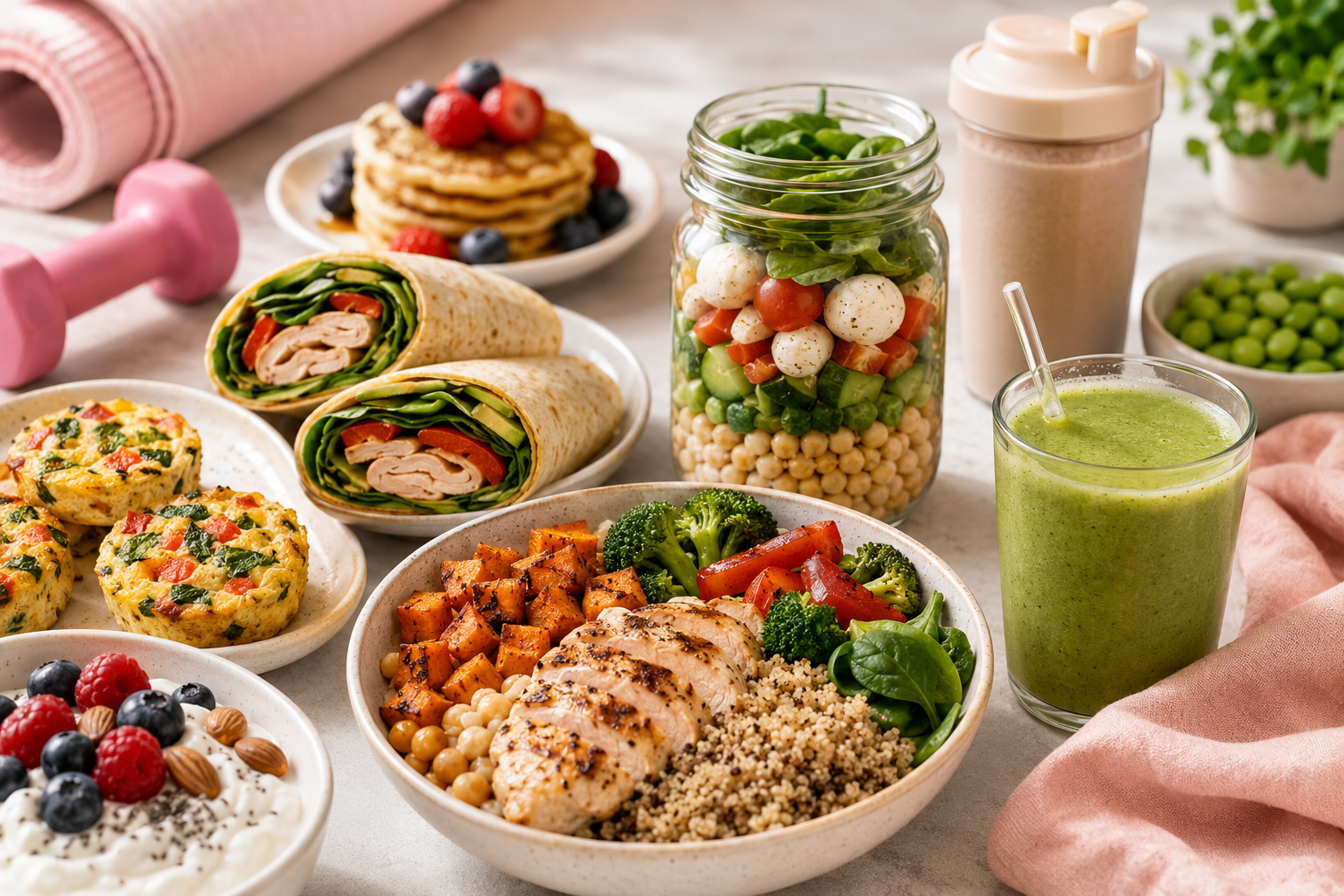
Finding nutritious meals that fit into a busy schedule can often feel like a challenge. Between work responsibilities, family commitments, errands, and everyday life, many women struggle to consistently prepare balanced meals that provide enough protein to support energy, satiety, and overall wellness. Fortunately, this easy high protein meal plan offers a practical solution that combines convenience, flavor, and nutrition into a realistic weekly routine.
This meal plan is designed around simple, wholesome ingredients that are easy to find and easy to prepare. From creamy Greek yogurt bowls and protein smoothies to hearty salmon dinners and satisfying chicken-based lunches, every meal focuses on delivering quality protein while maintaining balance and variety. Furthermore, the recipes emphasize nutrient-dense foods including vegetables, fruits, whole grains, legumes, and healthy fats.
High-protein eating has become increasingly popular because of its ability to help support muscle maintenance, reduce hunger, and promote steady energy throughout the day. However, many meal plans can feel complicated or restrictive. This plan takes a different approach. Instead of requiring hours in the kitchen, it focuses on practical meals that fit into real life.
Additionally, the included snack ideas provide extra protein throughout the day, helping prevent energy crashes and keeping hunger under control between meals. Cottage cheese, boiled eggs, edamame, and protein shakes offer simple solutions for busy schedules.
Whether you are looking to improve your nutrition, increase protein intake, support an active lifestyle, or simply reduce mealtime stress, this high protein meal plan can help create a sustainable foundation for healthy eating. Most importantly, it proves that nourishing your body does not have to be complicated.
Why You’ll Love This Recipe
It Saves Valuable Time
One of the greatest benefits of this meal plan is its simplicity. Many of the meals can be prepared in advance, allowing you to spend less time cooking during the week. Overnight oats, egg muffins, quinoa salad jars, and prepared vegetables make weekday meals quick and effortless.
It Keeps You Feeling Full Longer
Protein is known for its satisfying nature. Unlike meals that are heavy in refined carbohydrates, these protein-rich options help maintain fullness for longer periods. As a result, you may experience fewer cravings and less frequent snacking.
It Offers Excellent Variety
A common challenge with healthy eating is boredom. Fortunately, this meal plan includes diverse protein sources such as salmon, chicken, turkey, tuna, cod, tofu, Greek yogurt, cottage cheese, eggs, and legumes. This variety keeps meals interesting while providing different nutritional benefits.
It Supports Busy Lifestyles
Every meal in this plan was selected with convenience in mind. Many recipes require minimal cooking techniques and straightforward ingredients. Consequently, even individuals with packed schedules can successfully follow the plan.
It Fits a Wide Range of Goals
Whether your objective is weight management, muscle support, improved nutrition, or increased energy, this plan can be adapted to your needs. Portion sizes can be adjusted while maintaining the overall structure of balanced, protein-focused meals.
Health Benefits
Protein plays a critical role in supporting numerous bodily functions. First and foremost, it contributes to muscle maintenance and repair. For active women, adequate protein intake helps support recovery following exercise and daily physical activity.
Greek yogurt, one of the featured breakfast options, provides protein along with calcium, which supports bone health. Meanwhile, salmon delivers high-quality protein and beneficial omega-3 fatty acids that support heart and brain function.
Eggs contribute essential vitamins including vitamin D, B vitamins, and choline. Furthermore, cottage cheese provides additional calcium and protein while remaining versatile and convenient.
Legumes such as chickpeas, white beans, and edamame add both protein and fiber. The combination of protein and fiber helps promote satiety and supports digestive health. Consequently, these foods can contribute to more stable energy levels throughout the day.
Vegetables appear throughout the meal plan as well. Broccoli, spinach, bell peppers, cucumbers, asparagus, green beans, and mixed greens supply vitamins, minerals, antioxidants, and fiber. These nutrients support immune function, digestion, and overall wellness.
Whole grains including quinoa, brown rice, and oats provide complex carbohydrates that fuel daily activities. Unlike highly processed carbohydrates, these foods deliver sustained energy while contributing valuable nutrients.
Additionally, healthy fats from avocado, almonds, chia seeds, and salmon help support hormone health, nutrient absorption, and overall satisfaction after meals.
Together, these foods create a balanced approach to nutrition that supports both short-term energy and long-term health.
Preparation Time, Servings, and Nutritional Information
This meal plan is designed for efficiency. Most breakfasts require between five and ten minutes of preparation. Overnight oats can be prepared the night before, while smoothies come together in just a few minutes.
Lunches typically require between ten and fifteen minutes when ingredients are prepped ahead of time. Salad jars, wraps, and protein plates can be assembled quickly, making them ideal for workdays.
Dinner preparation generally ranges from twenty to thirty minutes. Sheet pan meals and stir-fries minimize cleanup while delivering satisfying results.
The meal plan serves one person per day but can easily be scaled for families or meal-prep purposes. Preparing larger batches of proteins, grains, and vegetables at the beginning of the week can significantly reduce daily cooking time.
On average, daily protein intake ranges from approximately 85 to 95 grams before snacks. With the addition of protein-rich snacks, total daily protein can comfortably exceed 100 grams.
A typical day may provide:
- Calories: 1,700–2,100
- Protein: 90–120 grams
- Carbohydrates: 150–220 grams
- Fat: 50–75 grams
- Fiber: 25–35 grams
Actual nutritional values will vary depending on ingredients, brands, and portion sizes. Nevertheless, the plan provides a balanced foundation that supports energy, fullness, and nutritional adequacy.
Ingredients List
Monday
- Greek yogurt
- Mixed berries
- Chia seeds
- Almond butter
- Chicken breast
- Quinoa
- Chickpeas
- Cucumber
- Tomatoes
- Feta cheese
- Salmon
- Broccoli
- Bell peppers
- Sweet potatoes
Tuesday
- Protein powder
- Banana
- Spinach
- Peanut butter
- Almond milk
- Turkey slices
- Avocado
- Whole wheat wrap
- Lean ground beef
- Mixed vegetables
- Brown rice
- Soy sauce
Wednesday
- Eggs
- Spinach
- Bell peppers
- Onion
- Shredded cheese
- Cottage cheese
- Cherry tomatoes
- Cucumbers
- Olives
- Almonds
- Chicken breast
- Brown rice
- Green beans
Thursday
- Oats
- Protein powder
- Chia seeds
- Milk
- Blueberries
- Tuna
- White beans
- Mixed greens
- Tofu
- Quinoa
- Tahini
- Roasted vegetables
Friday
- Protein pancake ingredients
- Greek yogurt
- Berries
- Chicken breast
- Romaine lettuce
- Parmesan cheese
- Croutons
- Caesar dressing
- Cod
- Asparagus
- Potatoes
- Lemon
These ingredients were selected because they combine nutritional value with convenience. Furthermore, most can be purchased in a single grocery trip and used across multiple meals, reducing waste and saving money.
Step-By-Step Cooking Instructions
Preparing Protein Foundations
Begin by preparing your primary protein sources. Grill or bake several chicken breasts, cook quinoa and brown rice, and portion them into containers. Additionally, roast vegetables such as broccoli, bell peppers, green beans, and asparagus.
Meal preparation at the start of the week creates a strong foundation. Consequently, daily meal assembly becomes significantly faster.
Creating High-Protein Breakfasts
For the Greek yogurt power bowl, add Greek yogurt to a bowl and top with berries, chia seeds, and almond butter. The creamy yogurt serves as a protein-rich base, while berries contribute freshness and natural sweetness.
For smoothies, blend protein powder, banana, spinach, peanut butter, and almond milk until smooth. If desired, add ice for a thicker texture. The finished smoothie should be creamy and vibrant green.
Egg muffins begin by whisking eggs and mixing them with diced vegetables and cheese. Pour into a muffin tin and bake until set. The tops should appear lightly golden and spring back when touched.
Overnight oats require mixing oats, protein powder, chia seeds, milk, and blueberries in a jar. Refrigerate overnight to allow the oats to soften and absorb the liquid.
Protein pancakes can be prepared according to your preferred recipe using protein powder or Greek yogurt. Cook until bubbles form on the surface before flipping.
Assembling Easy Lunches
For the chicken and quinoa salad jar, layer quinoa first, followed by chickpeas, vegetables, chicken, and dressing. Keeping the dressing at the bottom helps maintain freshness.
Turkey wraps come together by spreading hummus onto a whole wheat wrap and layering turkey, avocado, spinach, and cucumber. Roll tightly before slicing.
The cottage cheese power plate requires no cooking. Arrange cottage cheese, vegetables, olives, and almonds attractively on a plate for a satisfying meal.
Tuna and white bean salad combines tuna, beans, vegetables, and lemon juice. Stir gently to maintain texture while ensuring even distribution.
Chicken Caesar salad benefits from freshly grilled chicken and crisp romaine lettuce. Toss lightly to avoid sogginess.
Cooking Balanced Dinners
Sheet pan salmon is one of the easiest meals in the plan. Arrange salmon, broccoli, peppers, and sweet potatoes on a baking sheet. Season generously and roast until the salmon flakes easily.
Ground beef stir-fry begins by browning the beef. Once cooked, add vegetables and stir-fry until tender-crisp. Add soy sauce and serve over brown rice.
Lemon garlic chicken develops flavor when chicken is seasoned before cooking. Cook until golden and pair with rice and green beans.
For the tofu bowl, roast tofu cubes until crisp. Combine with quinoa, vegetables, and tahini sauce for a balanced meal.
Baked cod cooks quickly and pairs beautifully with roasted potatoes and asparagus. A squeeze of fresh lemon brightens the entire dish.
Meal Prep Success Strategies
Store proteins separately from delicate vegetables when possible. Furthermore, keep dressings on the side until serving time. This approach helps maintain freshness throughout the week.
Label containers with meal names and preparation dates. As a result, organization becomes easier and food waste is minimized.
Maintaining Flavor Throughout the Week
Seasoning is essential. Herbs, spices, citrus juice, garlic, and simple sauces can transform basic ingredients into exciting meals. Therefore, do not hesitate to experiment with flavor combinations while maintaining the overall structure of the plan.
How to Serve
Presentation can make healthy meals feel more enjoyable. For breakfasts, use colorful bowls and top with fresh fruit for visual appeal. Meanwhile, smoothies can be served in tall glasses with reusable straws.
Lunches benefit from layered containers and fresh garnishes. A sprinkle of herbs or seeds adds texture and color. Wraps can be sliced diagonally for a more polished appearance.
Dinner plates should aim for balance. Position protein as the centerpiece and surround it with colorful vegetables and whole grains. This approach creates a visually appealing meal while naturally encouraging portion balance.
For guests, serve proteins on platters alongside vegetables and grains family-style. For busy weeknights, pre-portioned meal prep containers offer convenience without sacrificing nutrition.
Pairing Suggestions
Protein-rich meals pair beautifully with refreshing beverages. Sparkling water infused with citrus complements nearly every meal while adding a refreshing element.
Green tea works particularly well alongside lighter lunches such as tuna salad or chicken Caesar salad. Its clean flavor balances richer ingredients.
For breakfast, coffee or unsweetened iced coffee pairs wonderfully with Greek yogurt bowls and protein pancakes. The combination feels satisfying and energizing.
Roasted vegetables make excellent side dishes throughout the week. Additionally, mixed green salads provide freshness and extra fiber.
A creative pairing is fruit salsa served alongside grilled chicken or salmon. The sweet and savory contrast creates unexpected flavor while adding extra nutrients.
Whole grain crackers, fresh fruit, and vegetable sticks can also complement many lunches and snacks.
Storage, Freezing and Reheating Instructions
Most prepared proteins remain fresh in the refrigerator for three to four days when stored properly in airtight containers.
Cooked rice and quinoa generally last up to four days under refrigeration. Vegetables should be stored separately whenever possible to maintain texture.
Egg muffins freeze exceptionally well. Place cooled muffins in freezer-safe containers and freeze for up to three months. Reheat in the microwave or oven before serving.
Cooked chicken, ground beef, salmon, and cod can also be frozen for up to three months. For best quality, wrap tightly to minimize freezer burn.
Overnight oats should not be frozen. Instead, prepare fresh batches every few days.
When reheating proteins, use moderate heat to prevent drying. Adding a small splash of water or broth helps maintain moisture.
Fresh salads generally do not freeze well because vegetables lose texture after thawing. Therefore, assemble salads fresh whenever possible.
Common Mistakes to Avoid
Skipping Meal Prep
Without preparation, healthy choices become more difficult. Even thirty minutes of prep can dramatically improve weekly consistency.
Not Eating Enough Protein
Some individuals underestimate protein needs. Including protein at every meal helps support satiety and balanced nutrition.
Ignoring Vegetables
Protein is important, but vegetables provide essential vitamins, minerals, and fiber. Aim for colorful variety throughout the week.
Overcomplicating Recipes
Simple meals are often more sustainable. Focus on consistency rather than perfection.
Using Too Little Seasoning
Healthy meals should still be flavorful. Herbs, spices, citrus, and garlic help create enjoyable dishes without excessive calories.
Waiting Until Extremely Hungry
Planning meals and snacks prevents impulsive choices and helps maintain steady energy levels.
Pro Tips
Batch Cook Proteins
Cooking several servings of chicken, salmon, or beef at once saves significant time during busy weekdays.
Use Frozen Vegetables
Frozen vegetables are nutritious, convenient, and reduce food waste. They are especially helpful during hectic weeks.
Rotate Protein Sources
Different protein sources provide different nutrients. Rotating options keeps meals interesting and nutritionally balanced.
Prepare Snack Boxes
Portion snacks ahead of time. Cottage cheese, boiled eggs, and edamame become grab-and-go options.
Keep Flavor Boosters Available
Lemon juice, fresh herbs, hot sauce, and spice blends can instantly transform simple meals.
Build Flexible Bowls
Grains, vegetables, proteins, and sauces can be mixed and matched to create endless meal combinations.
Frequently Asked Questions
Can I make this meal plan vegetarian?
Yes. Replace animal proteins with tofu, tempeh, edamame, lentils, beans, and plant-based protein products while maintaining similar protein targets.
Can I prepare everything on one day?
Absolutely. Many people successfully prep proteins, grains, and vegetables on Sunday for the upcoming week.
Is this meal plan good for weight loss?
It can support weight-management goals because protein promotes fullness. However, portion sizes should be adjusted according to individual needs.
Can I substitute ingredients?
Yes. Flexibility is encouraged. For example, cod can replace salmon, brown rice can replace quinoa, and Greek yogurt can replace cottage cheese.
How much protein do I need daily?
Individual needs vary based on activity level, age, and goals. This meal plan provides a strong protein foundation that many active adults find beneficial.
What if I do not like meal prep?
Focus on preparing only a few components in advance. Even cooking proteins ahead of time can significantly reduce daily effort.
Conclusion and Call to Action
This easy high protein meal plan demonstrates that healthy eating can be practical, enjoyable, and achievable even during the busiest weeks. By focusing on simple ingredients, balanced nutrition, and realistic preparation strategies, it removes much of the stress commonly associated with meal planning.
Throughout the week, each meal contributes valuable protein while also delivering fiber, vitamins, minerals, and healthy fats. Furthermore, the variety of ingredients helps prevent boredom and encourages long-term consistency. From creamy Greek yogurt bowls and energizing smoothies to satisfying salmon dinners and hearty stir-fries, every meal is designed to support wellness without requiring complicated cooking techniques.
Perhaps most importantly, this plan emphasizes sustainability. Rather than pursuing perfection, it encourages preparation, flexibility, and balance. Small consistent actions often lead to meaningful results over time.
Use this plan as written or customize it to fit your preferences and lifestyle. Adjust portions, swap ingredients, and experiment with seasonings to make it your own. The goal is to create a routine that supports both your health and your schedule.
If you try this meal plan, keep notes about your favorite meals and successful prep strategies. Over time, you can build a personalized system that makes healthy eating feel effortless.
Remember, consistency changes everything. One nutritious meal leads to another, and small daily choices add up to lasting progress.