
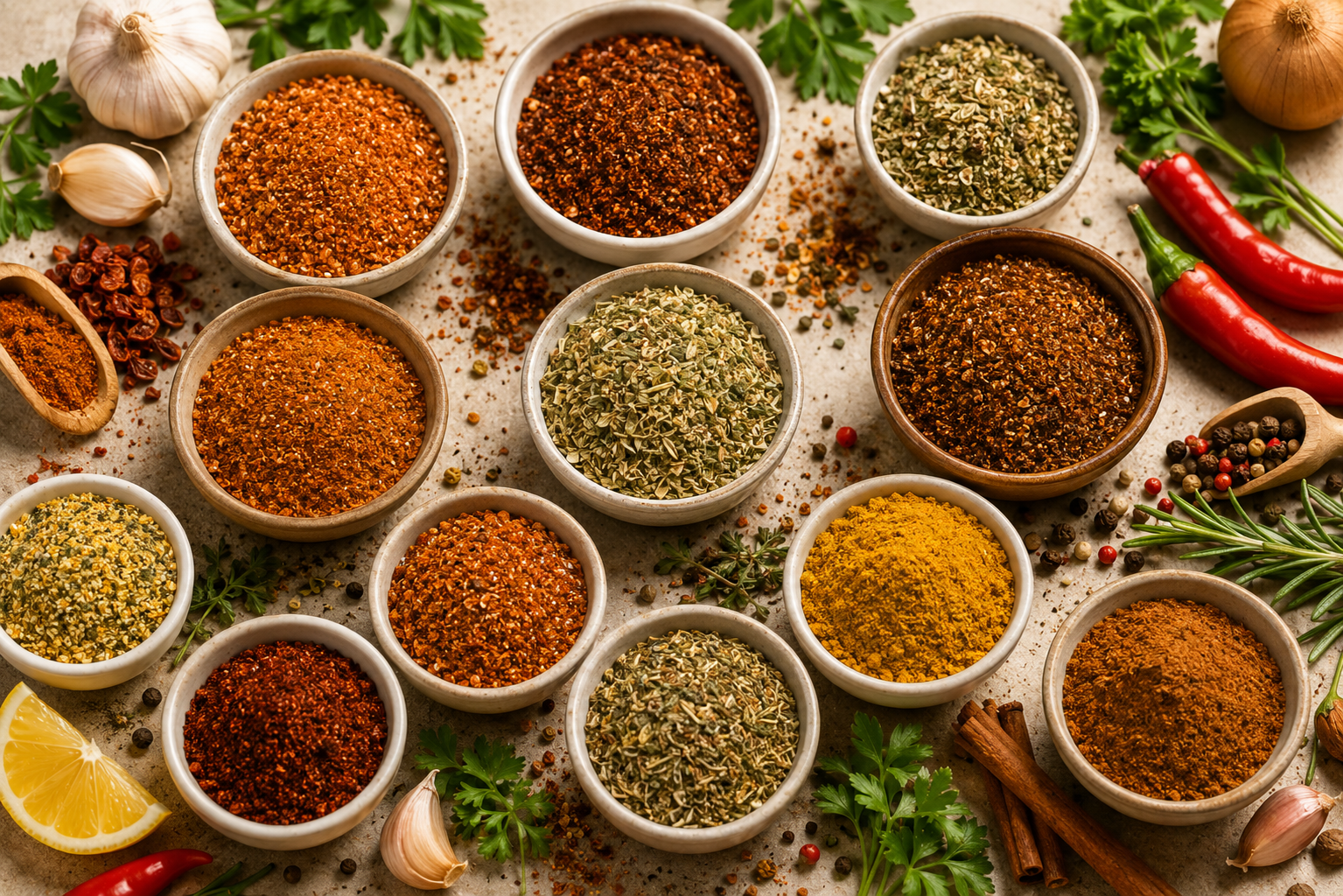
A well-stocked spice cabinet is one of the most powerful tools in any kitchen. While fresh ingredients provide texture and substance, spices are what transform simple meals into memorable dishes filled with aroma, depth, and character. Whether you’re preparing a quick weeknight dinner, a slow-cooked family meal, or a special gathering with friends, the right seasoning blend can make all the difference. That is exactly why homemade spice blends deserve a permanent place in every home cook’s repertoire.
These twelve homemade spice blends offer endless possibilities for elevating everyday cooking. From the bold flavors of Taco Seasoning and Fajita Seasoning to the herbaceous notes of Italian Seasoning and Mediterranean Blend, each recipe is carefully balanced to bring out the best in your ingredients. Furthermore, you’ll find versatile favorites like All-Purpose Seasoning, Lemon Pepper, Cajun Seasoning, and Smoky BBQ Rub that can instantly enhance everything from chicken and seafood to vegetables and grains.
One of the greatest advantages of making your own spice blends is control. Unlike many store-bought seasonings, homemade versions allow you to customize salt levels, adjust heat, avoid unnecessary additives, and create flavors tailored specifically to your preferences. Additionally, preparing spice blends at home is remarkably economical. A few pantry staples can yield multiple jars of seasoning at a fraction of the cost of pre-packaged blends.
Another benefit is freshness. Spices gradually lose potency over time, and homemade blends made with recently purchased ingredients often deliver more vibrant flavor and aroma than commercial alternatives. As a result, even simple dishes can taste more exciting and satisfying.
Whether you are an experienced home cook or just beginning your culinary journey, these twelve spice blends provide an easy and rewarding way to add flavor, creativity, and versatility to your cooking routine.
Why You’ll Love This Recipe
You Save Money
One of the most compelling reasons to make homemade spice blends is the significant cost savings. Purchasing individual spices in larger quantities is often much cheaper than buying multiple pre-made seasoning packets. Consequently, a small investment in pantry staples can provide months of flavorful cooking.
Complete Control Over Ingredients
Many commercial spice blends contain anti-caking agents, preservatives, excess sodium, or added sugars. When making your own blends, you decide exactly what goes into each jar. Furthermore, you can customize every recipe to match your dietary needs and flavor preferences.
Incredible Versatility
These spice blends can be used across countless recipes. A single batch of Taco Seasoning may flavor tacos, soups, casseroles, roasted vegetables, and grilled meats. Similarly, Italian Seasoning can enhance pasta sauces, marinades, breads, and salads.
Fresh, Vibrant Flavor
Freshly mixed spices offer noticeably brighter aromas and stronger flavor profiles than older store-bought blends. Additionally, combining spices yourself allows you to ensure maximum freshness and quality.
Perfect for Meal Prep
Having ready-to-use spice blends on hand makes cooking faster and more efficient. Instead of measuring multiple spices every time you prepare a meal, you simply reach for a prepared seasoning blend and start cooking.
Health Benefits
Homemade spice blends offer more than just flavor. Many spices contain naturally occurring compounds that contribute beneficial properties to your meals. While spices should not be viewed as medicinal ingredients, they can play a positive role in a balanced diet.
Paprika, found in several blends, contributes antioxidants and vibrant color. Additionally, smoked paprika adds rich flavor without requiring excess fats or calories.
Garlic powder and onion powder provide savory depth while containing naturally occurring plant compounds. These ingredients allow cooks to create flavorful dishes with fewer processed ingredients.
Turmeric, featured in the Curry Blend, is valued for its bright color and distinctive flavor. Combined with cumin and ginger, it creates a complex seasoning profile commonly used in many cuisines.
Dried herbs such as oregano, basil, thyme, rosemary, and parsley contribute aromatic compounds that enhance dishes naturally. Furthermore, these herbs allow cooks to build flavor without relying heavily on salt.
Lemon zest used in Lemon Pepper Seasoning delivers concentrated citrus oils that provide brightness and freshness. Likewise, spices such as cayenne pepper and black pepper contribute heat and complexity that can make meals more satisfying.
By preparing your own spice blends, you can also reduce sodium content compared to many commercial seasonings. Consequently, homemade blends support more mindful cooking while maintaining exceptional flavor.
Preparation Time, Servings, and Nutritional Information
These homemade spice blends are designed for convenience and long-term use. Preparing all twelve blends typically requires about 30 to 45 minutes, depending on your organization and measuring speed.
Preparation Time: 30–45 minutes
Cooking Time: None
Total Time: 30–45 minutes
Yield: 12 spice blends
Servings: Varies by usage
Each blend can produce approximately ½ to 1 cup of seasoning, depending on the recipe. Stored properly in airtight containers, most blends remain flavorful for up to six months.
Nutritional values vary by blend and serving size. Because spices are generally used in small amounts, calories remain relatively low. Most servings contribute fewer than 15 calories while adding substantial flavor.
Certain blends contain small amounts of sodium depending on the amount of salt included. However, homemade seasoning allows complete customization, making it easy to reduce or eliminate salt if desired.
Additionally, these spice blends are naturally vegan, vegetarian, dairy-free, and gluten-free when prepared using pure spices without additives. As a result, they fit easily into a wide variety of dietary lifestyles.
Ingredients List
1. All-Purpose Seasoning
- 2 tbsp paprika
- 1 tbsp garlic powder
- 1 tbsp onion powder
- 1 tsp salt
- 1 tsp black pepper
2. Taco Seasoning
- 2 tbsp chili powder
- 1 tbsp cumin
- 1 tbsp paprika
- 1 tsp garlic powder
- 1 tsp onion powder
- ½ tsp oregano
- ½ tsp salt
- ¼ tsp black pepper
3. Garlic Herb Blend
- 2 tbsp garlic powder
- 1 tbsp onion powder
- 1 tbsp dried parsley
- 1 tsp oregano
- 1 tsp basil
- 1 tsp salt
- ½ tsp black pepper
4. Cajun Seasoning
- 2 tbsp paprika
- 1 tbsp garlic powder
- 1 tbsp onion powder
- 1 tsp oregano
- 1 tsp thyme
- 1 tsp salt
- ½ tsp cayenne pepper
- ½ tsp black pepper
5. Italian Seasoning
- 2 tbsp oregano
- 1 tbsp basil
- 1 tbsp parsley
- 1 tsp garlic powder
- 1 tsp onion powder
- ½ tsp thyme
- ½ tsp salt
- ¼ tsp black pepper
6. Smoky BBQ Rub
- 2 tbsp brown sugar
- 2 tbsp paprika
- 1 tbsp garlic powder
- 1 tbsp onion powder
- 1 tsp smoked paprika
- 1 tsp salt
- ½ tsp black pepper
- ¼ tsp cayenne pepper
7. Lemon Pepper Seasoning
- 3 tbsp black pepper
- 2 tbsp lemon zest
- 1 tbsp garlic powder
- 1 tbsp onion powder
- 1 tsp salt
8. Fajita Seasoning
- 2 tbsp chili powder
- 1 tbsp cumin
- 1 tbsp paprika
- 1 tsp garlic powder
- 1 tsp onion powder
- 1 tsp salt
- ½ tsp oregano
- ½ tsp black pepper
9. Curry Blend
- 2 tbsp curry powder
- 1 tbsp cumin
- 1 tsp turmeric
- 1 tsp garlic powder
- 1 tsp ginger
- ½ tsp salt
- ¼ tsp black pepper
10. Chili Seasoning
- 3 tbsp chili powder
- 1 tbsp cumin
- 1 tbsp garlic powder
- 1 tsp onion powder
- 1 tsp cocoa powder
- 1 tsp salt
- ½ tsp oregano
- ½ tsp cayenne pepper
11. Mediterranean Blend
- 2 tbsp oregano
- 1 tbsp basil
- 1 tbsp rosemary
- 1 tsp thyme
- 1 tsp garlic powder
- 1 tsp onion powder
- ½ tsp salt
- ½ tsp black pepper
12. Pumpkin Pie Spice
- 2 tbsp cinnamon
- 1 tbsp ginger
- 1 tbsp nutmeg
- 1 tsp allspice
- 1 tsp cloves
Each ingredient contributes unique qualities. Paprika provides color and mild sweetness, cumin adds earthiness, garlic powder creates savory depth, while herbs deliver freshness and complexity. Meanwhile, spices such as cinnamon, nutmeg, and cloves create warmth ideal for baking applications.
Step-By-Step Cooking Instructions
Gather and Organize Ingredients
The first step in creating homemade spice blends is organization. Gather all spices, measuring spoons, bowls, airtight containers, labels, and a whisk or spoon.
Before mixing, inspect your spices for freshness. Spices that have been sitting in a cabinet for years may have lost much of their potency. Fresh spices produce stronger aromas and richer flavors.
Organizing ingredients beforehand also reduces preparation time and minimizes mistakes.
Measure Accurately
Precision matters when creating seasoning blends. Although slight adjustments can be made later, accurate measurements ensure balanced flavor profiles.
Use standard measuring spoons and level each ingredient for consistency. Additionally, avoid packing powdered spices into measuring spoons, as this can alter proportions.
When working with strong spices such as cayenne pepper or cloves, careful measurement becomes particularly important because small amounts significantly impact flavor.
Combine Ingredients Thoroughly
For each blend, place all ingredients into a mixing bowl.
Use a whisk, fork, or spoon to stir thoroughly. Continue mixing until colors and textures appear evenly distributed.
This step is especially important for blends containing multiple herbs and spices of varying sizes. Uniform distribution ensures consistent flavor in every use.
Break Up Clumps
Certain spices, particularly brown sugar in BBQ Rub or dried citrus zest in Lemon Pepper Seasoning, may form small clumps.
Use the back of a spoon to break apart these clumps before storage. Alternatively, a small food processor can help create a more uniform texture.
The goal is a free-flowing seasoning blend that measures easily.
Taste and Customize
One of the greatest benefits of homemade spice blends is flexibility.
If you enjoy spicier flavors, increase cayenne pepper in Cajun or Chili Seasoning. If you prefer less salt, reduce or omit it entirely. Likewise, additional herbs can be incorporated into Mediterranean or Italian blends.
Creating personalized versions often leads to signature family recipes.
Transfer to Storage Containers
Once blended, transfer seasonings to clean, dry jars or airtight containers.
Glass spice jars work particularly well because they protect flavor while allowing easy visibility.
Use a funnel if necessary to avoid spills and maintain a clean workspace.
Label Properly
Always label each container with the blend name and preparation date.
Proper labeling prevents confusion and helps track freshness. Furthermore, it encourages regular use rather than allowing blends to sit forgotten in the pantry.
Allow Flavors to Develop
Although spice blends can be used immediately, allowing them to rest for 24 hours often improves flavor integration.
During this time, aromatic compounds intermingle and create more cohesive seasoning profiles.
As a result, blends often taste more balanced after a short resting period.
Best Uses for Each Blend
All-Purpose Seasoning
Perfect for everyday cooking. Use it on vegetables, chicken, fish, potatoes, eggs, and roasted meats.
Taco Seasoning
Ideal for tacos, burritos, fajitas, nachos, enchiladas, and taco soups.
Garlic Herb Blend
Excellent for chicken, seafood, vegetables, potatoes, and homemade bread.
Cajun Seasoning
Adds bold flavor to shrimp, chicken, sausage, rice dishes, and roasted vegetables.
Italian Seasoning
Perfect for pasta sauces, pizza, marinades, and salad dressings.
Smoky BBQ Rub
Ideal for ribs, pork shoulder, chicken wings, brisket, and grilled meats.
Lemon Pepper
Enhances fish, chicken, vegetables, and fresh salads.
Fajita Seasoning
Designed for sizzling fajitas but equally delicious on steak, chicken, and peppers.
Curry Blend
Perfect for curries, lentils, rice dishes, roasted vegetables, and soups.
Chili Seasoning
Adds rich flavor to chili, stews, soups, and ground meat dishes.
Mediterranean Blend
Excellent on grilled chicken, lamb, roasted potatoes, and vegetables.
Pumpkin Pie Spice
Ideal for pies, cookies, muffins, oatmeal, pancakes, and coffee drinks.
How to Serve
Homemade spice blends become the foundation for countless recipes. Rather than serving them directly, they are incorporated into meals to enhance flavor and aroma.
For everyday cooking, keep frequently used blends near your stove for quick access. All-Purpose Seasoning and Garlic Herb Blend work especially well for daily meal preparation.
When entertaining, consider creating a seasoning station for grilled meats and vegetables. Guests can customize flavors using different blends.
Additionally, homemade spice blends make thoughtful gifts. Package them in decorative jars with labels and recipe suggestions for a practical and personal present.
For meal prep, pre-season proteins and vegetables before storing them in the refrigerator. This simple step saves time while ensuring consistent flavor throughout the week.
Pairing Suggestions
All-Purpose Seasoning complements nearly any protein and vegetable combination.
Taco and Fajita Seasonings pair naturally with tortillas, beans, rice, guacamole, and salsa.
Italian Seasoning works beautifully alongside olive oil, tomatoes, garlic, and Parmesan cheese. Meanwhile, Mediterranean Blend pairs exceptionally well with feta cheese, olives, lemon, and grilled vegetables.
Smoky BBQ Rub enhances classic barbecue sides such as coleslaw, baked beans, cornbread, and potato salad.
Lemon Pepper complements seafood, asparagus, green beans, and rice pilaf.
Curry Blend pairs wonderfully with coconut milk, lentils, chickpeas, and basmati rice.
An unexpected but delicious pairing is using Pumpkin Pie Spice in roasted sweet potatoes. The warm spices enhance natural sweetness and create a comforting side dish.
Storage, Freezing and Reheating Instructions
Proper storage is essential for preserving flavor and aroma.
Store spice blends in airtight containers away from direct sunlight, heat, and moisture. A cool pantry or spice drawer is ideal.
Most homemade spice blends remain at peak quality for approximately six months. However, they often remain safe to use beyond this timeframe, although flavor intensity may gradually decrease.
Freezing is generally unnecessary for dry spice blends. Instead, focus on maintaining airtight storage and minimizing exposure to humidity.
If a blend develops clumps due to moisture, break them apart gently before use. However, significant moisture exposure may warrant replacement.
Avoid storing spices above the stove where heat and steam can accelerate flavor loss.
Common Mistakes to Avoid
One common mistake is using stale spices. Old spices lose potency and result in bland seasoning blends.
Another issue is inaccurate measuring. Even small variations can alter balance, especially in recipes containing potent spices.
Failing to mix thoroughly may create uneven flavor distribution. Consequently, some portions may taste stronger than others.
Many cooks also overlook proper storage. Exposure to light, heat, and moisture quickly diminishes spice quality.
Over-salting is another frequent problem. Start conservatively and adjust later if necessary.
Finally, avoid making excessively large batches unless you use them frequently. Smaller batches remain fresher and more flavorful.
Pro Tips
Toast whole spices before grinding whenever possible. This simple technique intensifies aroma and flavor significantly.
Use high-quality spices from reputable sources for superior results.
Consider creating salt-free versions of frequently used blends. This provides greater flexibility during cooking.
Keep duplicate jars for your most-used seasonings to avoid running out unexpectedly.
Invest in small glass jars with airtight lids. Proper storage dramatically extends flavor quality.
Finally, record any personal adjustments in a recipe notebook. Over time, you may develop customized blends perfectly suited to your cooking style.
Frequently Asked Questions
How long do homemade spice blends last?
Most blends maintain peak flavor for about six months when stored properly in airtight containers.
Can I make salt-free versions?
Absolutely. Simply omit the salt and adjust seasonings during cooking as needed.
Are homemade spice blends cheaper than store-bought?
In most cases, yes. Buying individual spices and mixing them yourself is typically more economical.
Can I double or triple these recipes?
Yes. These recipes scale easily and are ideal for batch preparation.
What containers work best?
Glass jars with airtight lids are generally the best option because they protect flavor and moisture content.
Can I substitute fresh herbs for dried herbs?
For long-term storage, dried herbs are recommended. Fresh herbs introduce moisture and reduce shelf life.
Which blend is the most versatile?
All-Purpose Seasoning is arguably the most versatile because it complements nearly every savory dish.
Conclusion and Call to Action
Homemade spice blends are one of the easiest and most rewarding ways to improve everyday cooking. With just a handful of pantry ingredients, you can create twelve versatile seasoning mixes that rival or surpass store-bought options in flavor, freshness, and value.
From bold Taco Seasoning and smoky BBQ Rub to aromatic Italian Seasoning and comforting Pumpkin Pie Spice, these blends offer endless possibilities for enhancing meals. Furthermore, they save time, reduce grocery costs, and allow complete control over ingredients.
Whether you are seasoning grilled chicken, flavoring soups, roasting vegetables, preparing pasta dishes, or baking desserts, these homemade spice blends provide a convenient foundation for delicious cooking. As your confidence grows, feel free to customize each blend and create unique variations tailored to your preferences.
Start with one or two favorites, stock your pantry with freshly blended seasonings, and discover how much flavor simple ingredients can deliver. Great cooking begins with great seasoning, and great seasoning begins right in your own kitchen.